Management and Coaching
Examples of project teams that I personally coached in my role as HHS Ignite Director
Administration for Native Americans: Grantee Connector Concept
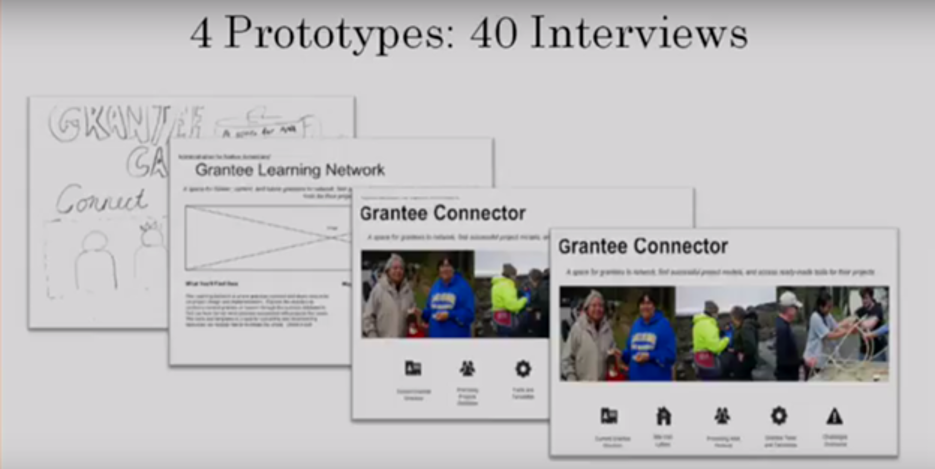
I managed a team thru the discovery, design, and piloting of a tool that serves to connect grantees serving Native Americans across the country.
The Administration for Native Americans (ANA) supports Native American communities by providing financial assistance and capacity building, gathering and sharing data, and advocating for improved policies within HHS and across the federal government. ANA awards approximately 180 grants annually to support locally-designed projects serving Native American communities.
The problem is that grantees across the country are often working on solving similar problems. They want to connect with each other to learn about successful project strategies and avoid duplication of effort. However, ANA has no easy-to-use, efficient mechanism to connect them and share information from past projects.
Through its work of interacting with grantees via surveys and in-person visits, the ANA team has long understood grantee needs, a common one being the ability to connect with other grantees to learn their lessons and use their knowledge as a resource. The team tested several iterations of a tool called the ‘Grantee Connector’ which serves as a curated database of grantee contacts, work products, and templates, but further, a facilitator for grantees to find one another, share, and learn from the experiences of others.
NIH Science Outreach Mobile Application (Bridge DC)
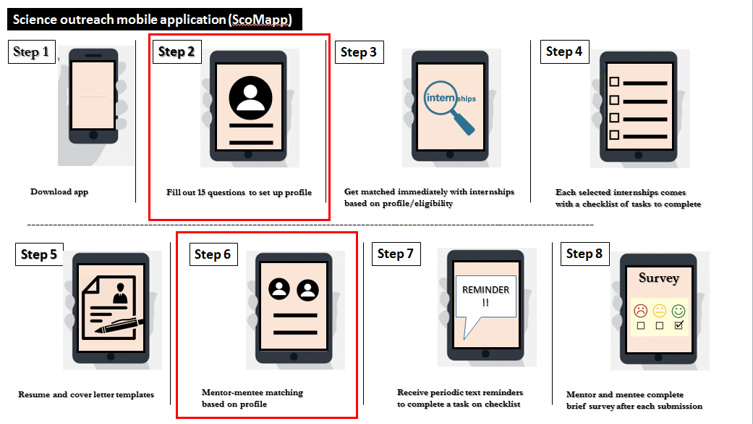
I managed a team that designed a mobile application (ScoMapp) and mentoring service concept that would assist high-school STEM students from poorer communities in finding and applying to NIH research internships. Their goal was to connect high schoolers from disadvantaged backgrounds to experiential opportunities in Science, Technology, Engineering and Mathematics (STEM).
Talented, low-income students are at extreme disadvantage. They are less likely to be aware of, and thus, less likely to participate, in opportunities available to become competitive applicants and matriculants. Programs such as the High School Scientific Training and Enrichment Program (HiSTEP) at the National Institutes of Health (NIH), although present, are often invisible in low SES communities.
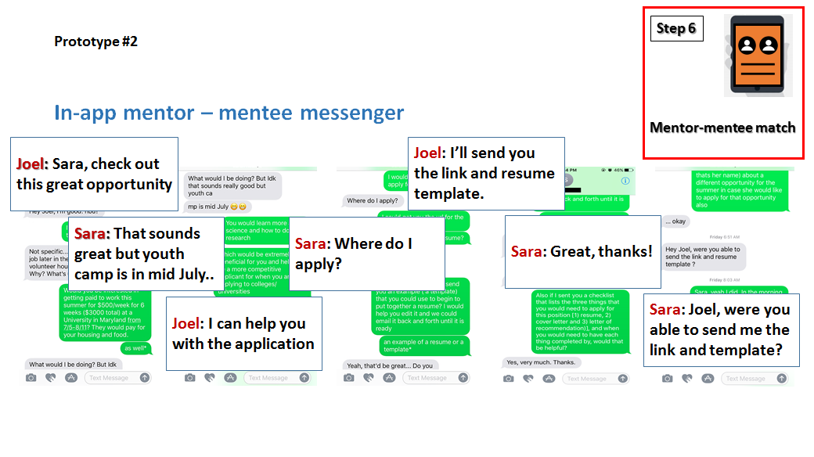
This team seeks to connect high schoolers from disadvantaged backgrounds to experiential opportunities in hopes of fostering their interest in STEM and broadening their educational horizons by sending periodic and tailored mobile notifications to high school students from low-income backgrounds in the DC Metropolitan area.
Reducing Donor Kidney Discards
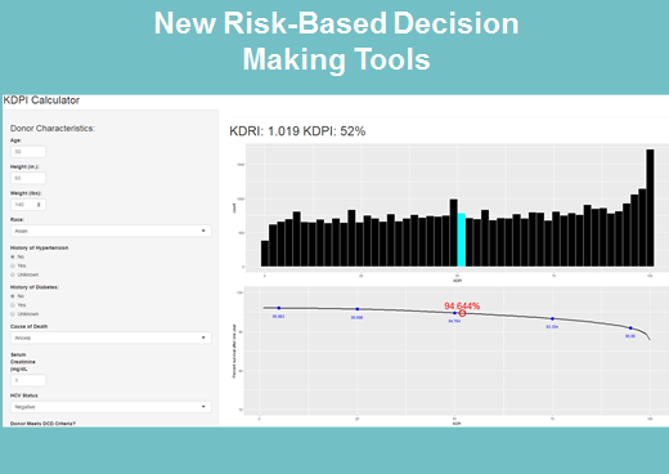
I managed a team thru the design of a tool and process that would help physicians and patients better understand real and perceived risks of using suboptimal kidneys in order to reduce recipient backlog and reduce donor kidney waste. Developed empathy with key stakeholders (surgeons and patients) in order to enable provider to communicate true value of kidneys to patients depending on quality of life, expected mortality.
In 2015, nearly 31,000 organ transplants were performed in the US. As impressive as these numbers seem, the demand is even greater with more than 121,000 patients currently awaiting an organ transplant. Due to this disparity, approximately 22 of those waiting die each day.
Each year, approximately 4,000 organs recovered from deceased donors were not used for transplant and instead were discarded.
HRSA Award Tracker: Grants Management System Design
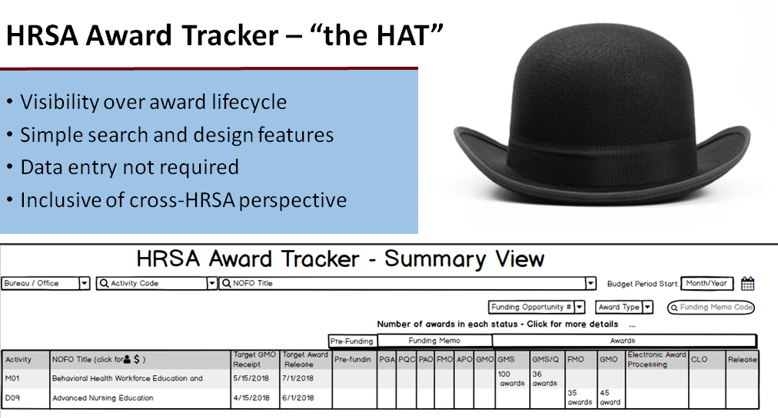
I coached a Health Resources and Services Administration team thru the design of a new system feature that would provide grant officers with visibility into the financial processing of thousands of grants worth over $1.4B.
