Zika Response in Puerto Rico
Client’s Prompt:
The Centers for Disease Control and Prevention (CDC) is tasked with responding to the world’s prevailing public health crises. In early 2016, amid a rapidly increasing number of reported Zika cases in Puerto Rico, the CDC responded with a maligned anti-Zika campaign based on poor assumptions about Puerto Rican culture. The CDC’s Incident Management group asked for our help to plan and test a means for improving its ability to respond to Zika, and other crises like it, with speed and efficacy.
What we produced:
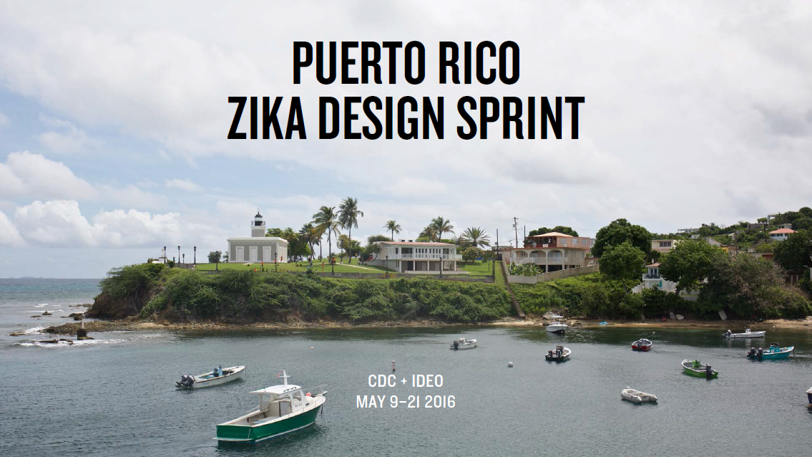
We helped the CDC conceive of and design a pilot that might demonstrate design methods as fast, effective and actionable, and as complementary to those approaches currently presiding in public health.
Our approach:
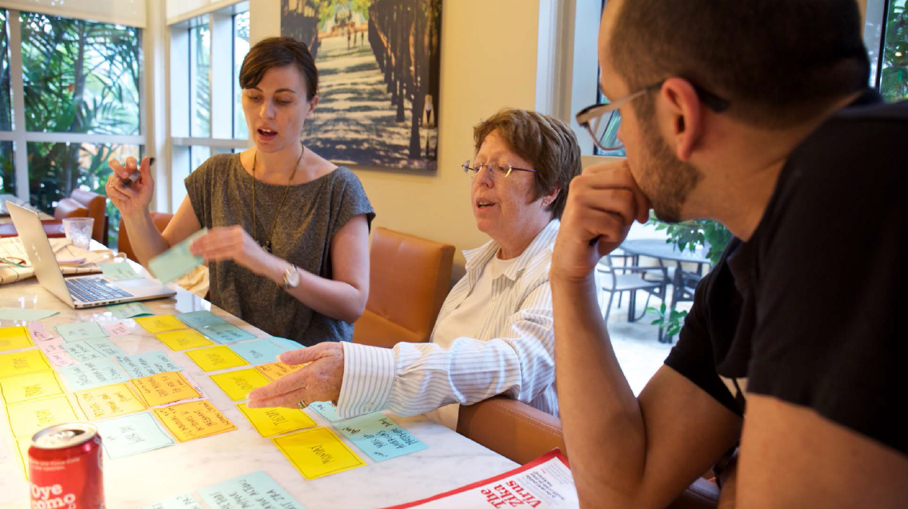
We visited the CDC’s emergency operations center and observed and interviewed members of the Incident Management team. We provided our CDC colleagues with background on design research methods, several pitches and value props that might help them justify to CDC leadership the use of a new methodology in a high-pressured arena. We facilitated the framing of a narrow, initial prompt: “How might we unlock greater community engagement in protecting pregnant women from becoming infected with the Zika virus?” I advised the Project Lead on the principles of design sprints and joined initial conversations with CDC leadership and the design consultancy IDEO. Over the 10-day design sprint, I coached the Project Lead daily on managing a multitude of stakeholders to include the IDEO design team, CDC leadership in Atlanta, and the local Puerto Rican public health authority among others. Following the sprint, I interviewed key members of CDC leadership and the design team.
The key insight:
The initial, struggling campaign was conceived, in-part, based on a public health intervention that had succeeded in addressing a mosquito-borne illness in Australia 50 years prior. The conservative culture of the CDC pushed its epidemiologists to implement solutions that were justifiable (statistically valid) versus pragmatic (novel, context-specific).
As is the norm, CDC had placed people in Puerto Rico to have ‘boots on the ground’, but despite what leaders in Atlanta initially claimed, the field staff were not given opportunity to provide strategic insight back to the “thinkers” in Atlanta.
Zika was the first public health crisis to have three significant vectors for transmission: mosquito; sexual; and mother-to-infant. The multi-disciplinary problems presented by the virus created a new level of complexity for CDC’s Incidence Management team which had trouble reconciling the ideas of experts from three different fields.
Neither Puerto Rican officials nor citizens necessarily trust the CDC or U.S. government.
The design research approach ultimately proved popular with CDC’s Incident Management team, the Director of which not only enthusiastically called for implementing one of the concepts presented, but who also asked that the design research approach be common protocol for future public health crises.
The approach also had its detractors from among a small but influential group within CDC that was threatened by the resultant findings. This group reacted by trying to discredit human-centered design as a valid approach in public health emergencies (design thinking still growing in popularity at CDC, however).

What resulted:
CDC leadership was pleased with the actionable nature of the research and findings. The CDC Foundation commissioned the use of design sprints in three additional US cities beset by a growing number of Zika cases. The findings from these sprints were used to inform public and private health efforts to combat the spread of Zika whether by improving mosquito abatement or reducing sexual transmission of the virus. Future public health cases will have the benefit of the approach.
