Human Services: Aim for Independence Initiative
Role: I led the project management, design research and strategy for this project from inception through validation and delivery of strategy and was an advisor through the initiative’s budget process with HHS Office of the Secretary and the Office of Management and Budget (culminating in a $300 million request).
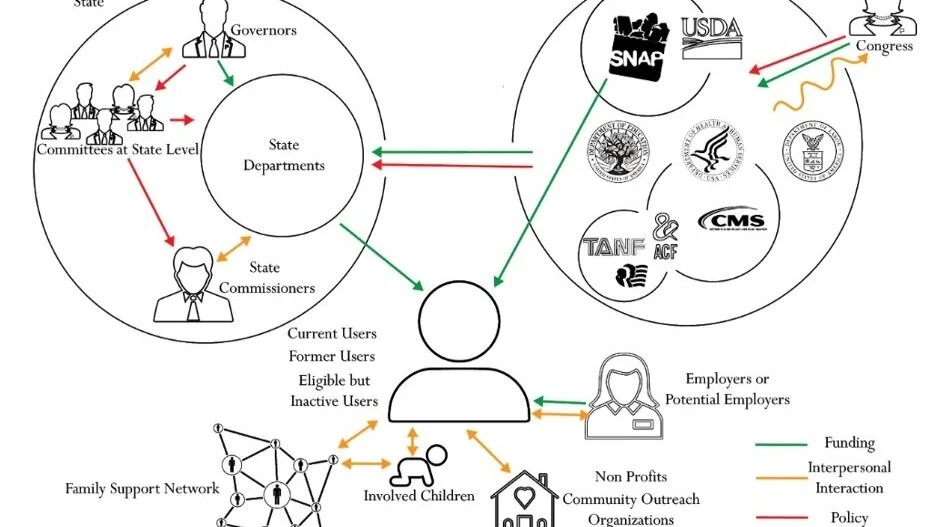
Background: The nation’s human services ecosystem, made up of policy-makers, philanthropic funders, administrators, service providers and needy families, represents the public assistance safety net (e.g., food stamps, medicaid, temporary cash assistance) serving all Americans. Unfortunately, the system is made up of a fragmented set of programs individually directed at families who need help, and is governed by a complex, onerous and often counterproductive set of policies and requirements that lead its administrators to focus on ensuring throughputs rather than achieving positive, sustaining outcomes for families and children.
Client Prompt: We were approached by the head of an initiative titled Aim for Independence, sponsored by top U.S. Dept. of Health and Human Services (HHS) and Administration for Children and Families (ACF) leadership, to help design a “center of excellence” that would transform the human services ecosystem into one that: a) addresses families’ long-term needs with effective, integrated programs and services; b) strives to sustainably lift families out of intergenerational disablers like poverty, mental illness, and substance abuse. I led the design team.
Approach: Given the dynamic between the federal government (grantor/funder) and State agencies (grant recipient administrators of programs) we identified the key users of the notional “center of excellence” as State and County human services commissioners. Although federal agencies provide the funding, State and County administrators pull the levers and make the majority of strategic decisions on which funds to request and thus the kinds of programs and services to administer for their constituent families. Thus, we believed that transforming the system required engagement and behavior change at the State and County leadership level. Working closely with our internal client, we segmented State commissioners across several important spectra (i.e., resources, integration, and political support) then set off on interviewing and observing a broad set of them. We performed unstructured interviews with 10 current and former State and County human services commissioners and uncovered critical insight into their motivations, frustrations and needs. We established two key commissioner personas: a) the optimistic but frustrated pragmatist, and; b) the traumatized survivor. Most commissioners joined the effort with lofty intentions but were soon confronted by a broken system of conflicting incentives and internal, organizational inertia that made innovation and change virtually impossible. We recognized the resounding tension between States’ mandatory compliance with myopic federal requirements versus a real need for flexibility in order for them to design and implement programs to meet their families’ and communities’ specific needs and context.
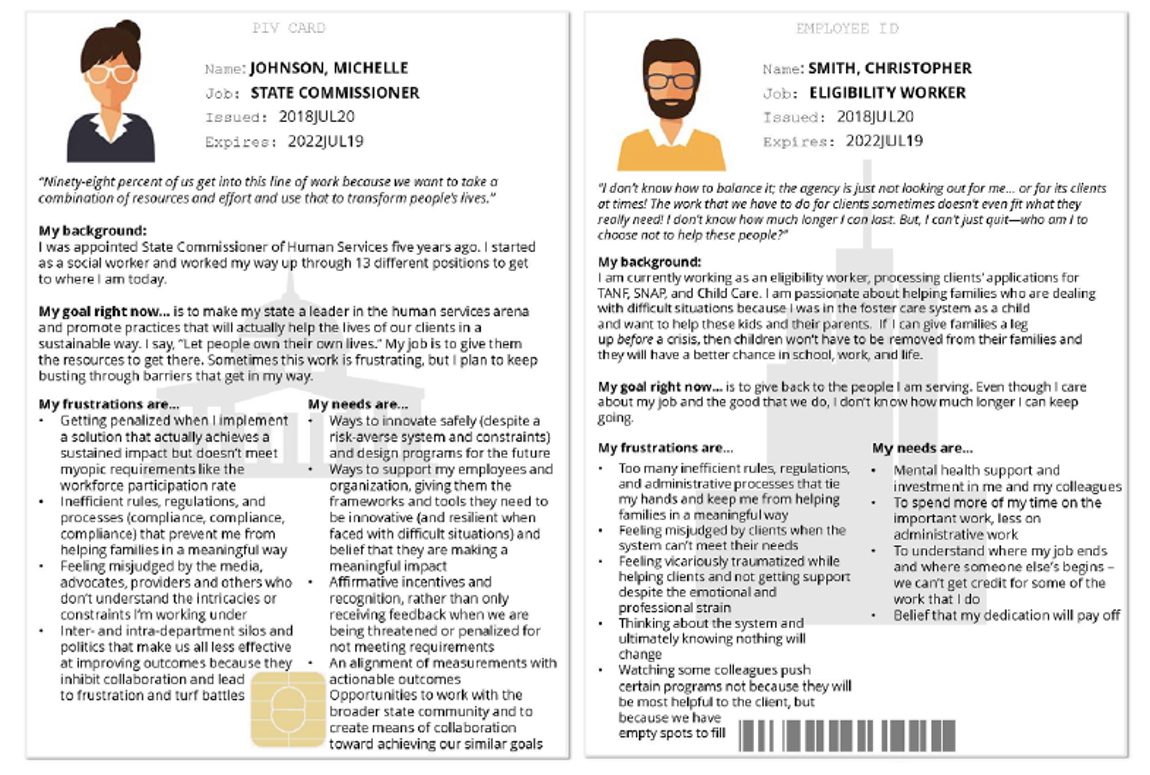
By talking to downstream stakeholders such as program managers, social workers and eligibility workers, we also realized that the entire system is traumatized, i.e., focused on internal resilience and generally resigned to meaningless compliance requirements, misaligned resources and poor long-term results for the majority of their beneficiary families. Our focused research on State and County and downstream stakeholders was part of a broader research effort that included deep dives into other key stakeholders like the beneficiaries (needy families) and funders (ACF leaders). We synthesized the findings and found common themes that cut across the key stakeholders, important among them: everyone was interested in shifting towards an outcomes-focused system that would be based on breaking the intergenerational revolving door of reliance on public assistance.We developed a volume of notional concepts with the intent to enable State Commissioners to align and experiment with creating new programs and strategies to address intergenerational issues and to focus on addressing meaningful, long-term outcomes for their families. We also sought concepts that would help State and County Departments of Human Services to build internal capacity to innovate. We tested a series of ideas and developed further iterations using feedback from an additional 10 interactions with State commissioners, directors and front-line staff. We also tested ideas with grantees and their front-line staff. Some of most popular concepts we developed and shared included: 1) innovation grants that would feature tight evaluation cycles and semi-flexible funding constraints; 2) advisors and blueprints for building innovation teams, and; 3) objective policy consultations and advocacy in order to develop, test and scale novel programs and strategies. We received critical feedback and insight from State stakeholders and their prioritization of more than 19 prototyped concepts.
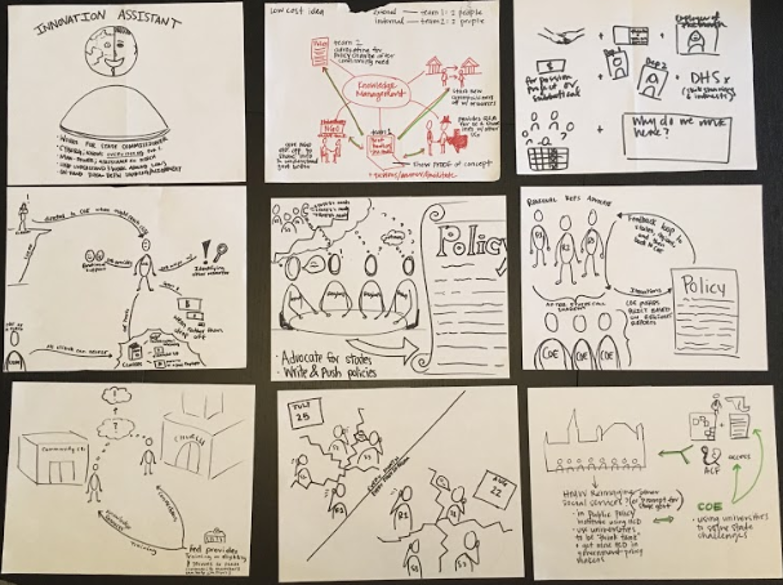
Presentation and Results: Our client was pleased with our findings and asked our team to present our research and most-validated concepts to the head of ACF. We helped the client gain the go-ahead from her superiors and the initiative immediately incorporated our concrete concepts into strategy memorandum, as well as policy documents and organizational and budget requests as submitted to leadership at HHS and ACF, as well as the Office of Management and Budget. We have also been retained to develop go-to market plans for the new “center of excellence” organization that will further develop and launch our concepts, entitled: the ACF Office for Economic Independence, which is slated to be a flagship office for the new Administrator.
